Hosted by CPAI
Upcoming
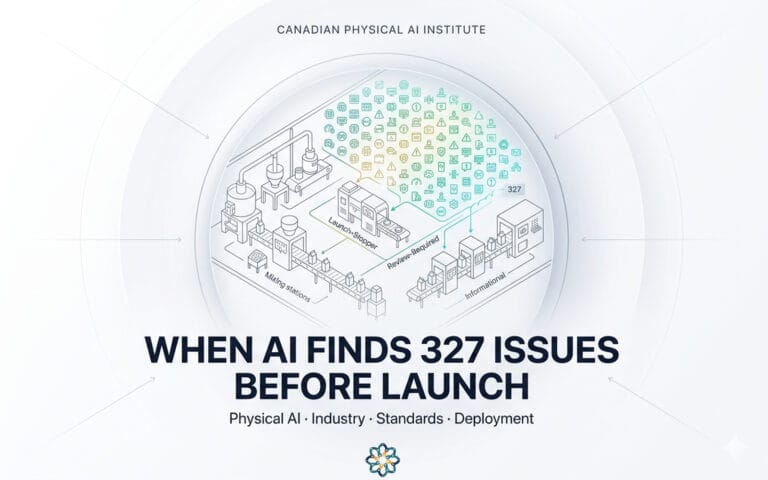
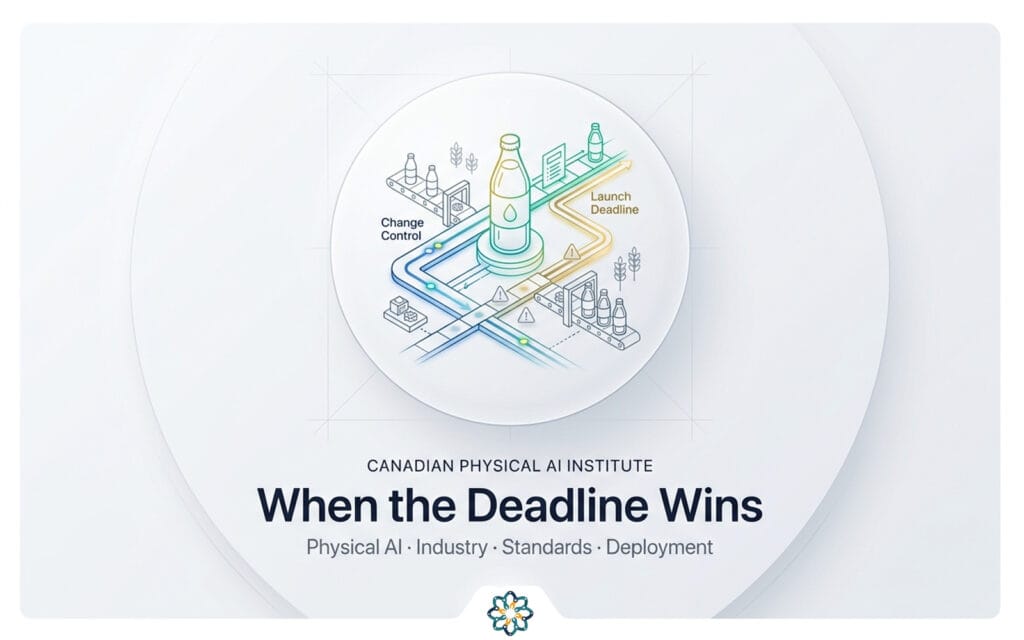
When the Deadline Wins
Why automated change control can fail under launch pressure and how food and beverage teams can strengthen controls before an audit, customer escalation, retailer issue, or recall investigation exposes the gap.
Food and beverage plants already have controls.
They have approval gates.
They have supplier approval processes.
They have label review.
They have QA release.
They have change-control forms.
They have QMS, PLM, ERP, project management tools, CAPA systems, and audit trails.
The problem is not usually that controls do not exist.
The problem is that under launch pressure, controls can appear complete while no longer matching the product, label, supplier, spec, process, or evidence that actually moved through the plant.
A dashboard may be green.
An approval may be logged.
A gate may be closed.
A checklist may be complete.
But the approval may be stale.
The final formula may have changed after review.
The label may not match the latest formulation.
The supplier document may have arrived after release pressure had already peaked.
The customer spec may have shifted outside the workflow.
The real decision may have happened in email, chat, a meeting, or a supplier portal.
This event shows how experienced food and beverage teams can use practical control tests to find these gaps faster.
AI will not replace QA, Regulatory, Food Safety, Product Development, or Operations judgment.
But it can help teams ask better questions, compare versions faster, reconstruct timelines, detect missing evidence, summarize side-channel decisions, and identify where human review is needed.
Core idea
The approval is only valid if the evidence it was based on is still true.
This session does not teach basic change control.
It teaches how to test the launch controls your organization already uses and how AI can make those tests faster, more consistent, and easier to repeat.
You should attend if this sounds familiar
Your system shows the launch was approved, but people still search email to understand what really happened.
Approvals are complete, but it is not always clear which formula, label, supplier spec, customer requirement, or production assumption was reviewed.
Supplier documents sometimes arrive late, outside the portal, or after the team has already made a practical decision.
Artwork changes, claims, customer edits, or formula changes move faster than the formal workflow.
Your team uses temporary approvals or conditional releases, but follow-up is inconsistent.
Plant-trial assumptions do not always hold during first production.
QA release depends on evidence spread across multiple systems, documents, people, and timestamps.
Your organization is exploring AI, but wants to use it responsibly — to support review, not create false confidence.
What participants will learn
By the end of this webinar, participants will be able to:
- Test whether an approval is still valid at the point of launch or release.
- Use AI-assisted comparison to identify version mismatches between formula, label, supplier spec, customer spec, and QA evidence.
- Map the difference between product reality, system status, and evidence timing.
- Apply failure-mode thinking to launch gates they already have.
- Use AI to summarize side-channel decisions from emails, chats, meeting notes, and supplier communications.
- Recognize exception debt before temporary approvals become permanent.
- Apply repeat-run lockout rules to prevent unresolved launch exceptions from carrying forward.
- Compare plant-trial assumptions with first-production reality.
- Use AI-assisted weak-signal detection to identify phrases and patterns that suggest control drift.
- Convert one rushed-launch workaround into a practical gate redesign.
Why this session is different
This is not a webinar about adding more approvals.
It is not a reminder to follow the SOP.
It is not a generic AI talk.
It is not about using AI to automate food safety decisions.
This session is about using AI carefully and practically to pressure-test existing launch controls.
Participants will learn how to find stale approvals, evidence gaps, side-channel decisions, exception debt, and repeat-run risks before they become visible through an audit finding, customer complaint, retailer escalation, production hold, label error, or recall investigation.
Learning outcomes
After attending, participants should be able to:
- Explain why a completed approval may no longer be valid.
- Use AI-assisted methods to identify stale evidence and version mismatches.
- Map product reality, system status, and evidence timing.
- Find failure modes in launch gates they already use.
- Decide which side-channel decisions must be captured formally.
- Use AI to summarize side-channel decisions for human review.
- Track temporary exceptions so they do not become permanent.
- Apply repeat-run lockout rules to unresolved launch risks.
- Review plant-trial assumptions before first production.
- Use weak signals to escalate control drift earlier.
- Turn one rushed-launch issue into a specific process improvement.
- Use AI responsibly as a review accelerator, not a decision-maker.
Who Should Attend
Related Upcoming Sessions